

Lake Tazawa, Akita.
Tazawako Onsen Coliving is set in Semboku City, Akita Prefecture — on the shore of Lake Tazawa, Japan’s deepest lake, and a short drive from the historic Nyuto Onsen hot spring village.
Lake Tazawa — Japan’s deepest lake.
At 423.4 metres, Lake Tazawa is the deepest lake in Japan — deep enough that its water rarely freezes, even in Akita’s harsh winters.
The result is a cobalt-blue surface that holds its colour through every season, ringed by the peaks of the Tazawako-Dakigaeri Prefectural Natural Park. The lake is best known for the legend of Tatsuko, a young woman who prayed for eternal beauty and was transformed into a dragon, said to still live in its depths. Her golden statue stands on the eastern shore.


A mountainside of hot springs.
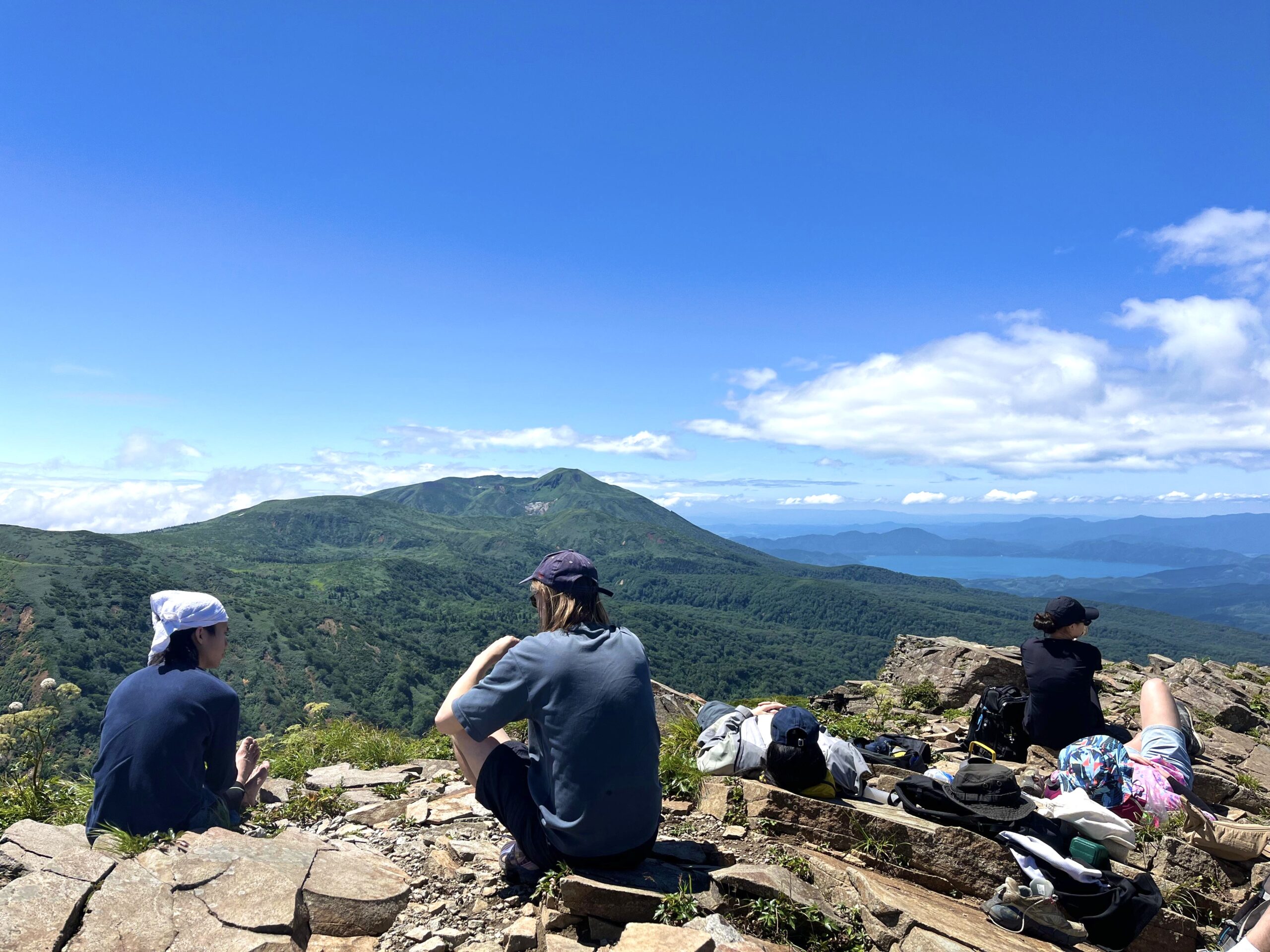
Tazawako Onsen Coliving sits within Tazawako Kogen Onsen, on the mid-slope of Mt. Akita-Komagatake (1,637m), at roughly 700m elevation — with views over the lake and, on a clear day, Mt. Chokai in the distance.
Five kilometres further into the mountains lies Nyuto Onsen, one of Japan’s best-known secluded hot spring villages: seven single-inn hot springs — including Tsurunoyu, Kuroyu, Ganiba, Taenoyu, and Magoroku — some tracing their history back to the 1600s. Tsurunoyu alone draws from four distinct hot spring sources within a 50-metre radius. These are working onsen, not spas built for tourists.
Three towns, one city — Semboku.
In 2005, the town of Tazawako merged with the town of Kakunodate and the village of Nishiki to form Semboku City. Each still has its own character.


Every season, another reason to stay.
Winter brings Tazawako Ski Resort, one of the largest ski areas in Akita Prefecture, plus snow sauna and quiet, snow-muffled onsen soaking.
Spring is cherry blossom season in Kakunodate, when the town’s weeping sakura draw visitors from across Japan. Summer opens the alpine trails of Mt. Komagatake, home to one of Japan’s largest colonies of komakusa wildflowers, and the lake itself for kayaking and swimming. Autumn turns Dakigaeri Gorge, sometimes called the “Nikko of Ou,” into a corridor of red and gold — a 20-minute drive from the coliving.




Akita, Tohoku.
Akita Prefecture sits on Japan’s Sea of Japan coast in the Tohoku region, reachable from Tokyo in under three hours by the Akita Shinkansen “Komachi.” It’s known nationally for its rice and sake, the Akita Inu dog breed, and the Namahage folk tradition of the Oga Peninsula — and, locally, for having some of the heaviest snowfall and quietest winters in Japan.
See how to get here.
Full directions from Tokyo, by train and by car, are on our homepage — along with rates, facilities, and how to get in touch.